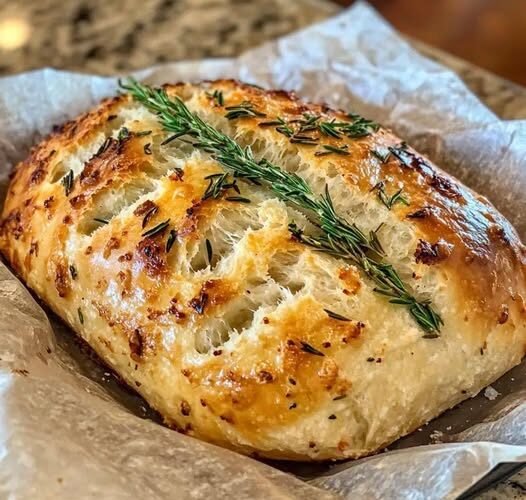
Making fresh homemade bread does not have to be complicated. This no-knead bread recipe without eggs or butter is one of the easiest ways to create a soft, rustic loaf with minimal effort and simple pantry ingredients. It is perfect for beginner bakers, busy families, and anyone who loves homemade artisan-style bread without spending hours kneading dough.
This easy homemade bread delivers a golden crust, airy texture, and delicious bakery-style flavor using basic ingredients like flour, yeast, water, salt, and oil. Since the dough requires no kneading, the gluten develops naturally during resting time, creating a beautifully textured loaf with very little hands-on work.
One of the biggest advantages of this recipe is its versatility. Because it contains no eggs and no butter, it is ideal for people looking for dairy-free bread recipes, egg-free baking ideas, or simple vegan bread alternatives. Despite the absence of rich ingredients like butter or eggs, the bread still bakes up soft inside with a chewy artisan crust outside.
The rise of no-knead bread recipes has transformed home baking. Many people now prefer easy overnight bread because it requires less effort while still producing bakery-quality results. This recipe follows that same simple approach while maintaining incredible flavor and texture.
Whether you want fresh breakfast bread, sandwich bread, soup-side bread, or homemade toast, this loaf fits perfectly into everyday cooking.
Why No-Knead Bread Works So Well
- Traditional bread recipes rely heavily on kneading to develop gluten, which creates structure and elasticity in the dough. However, in no-knead bread recipes, time replaces physical kneading. As the dough rests and ferments, gluten strands slowly strengthen naturally.
- This slow fermentation process also improves flavor. The dough develops a deeper, slightly tangy artisan taste that resembles bread from professional bakeries.
- Another reason this bread works beautifully is hydration. No-knead dough usually contains more water than standard bread dough. The wetter consistency allows steam to form during baking, helping create a crisp crust and airy crumb.
- The result is rustic homemade bread with very little effort.
The Beauty of Egg-Free and Butter-Free Bread
- Many homemade bread recipes use eggs for richness and butter for softness. However, removing them creates a lighter, simpler loaf that still tastes delicious.
- Oil provides enough moisture to keep the bread tender while maintaining a soft texture. Because there are no eggs, the bread also has a cleaner, more traditional artisan flavor.
- This makes the recipe suitable for:
- Vegan baking
- Dairy-free diets
- Egg allergies
- Budget-friendly cooking
- Minimal ingredient recipes
- Simple pantry baking
- The recipe proves that excellent bread does not require expensive or complicated ingredients.
Choosing the Best Flour for Homemade Bread
- Bread flour is ideal for achieving chewy texture and excellent structure because it contains more protein than regular all-purpose flour. However, all-purpose flour also works well for softer homemade bread.
- If you prefer a heartier loaf, part of the flour can be replaced with whole wheat flour. This creates a richer flavor and slightly denser texture.
- For best results:
- Measure flour accurately
- Avoid packing flour tightly into measuring cups
- Use fresh flour for optimal flavor
- Fresh flour contributes greatly to overall bread quality.
Understanding Yeast in No-Knead Recipes
- Yeast is the ingredient that gives bread its rise and airy texture. Instant yeast or active dry yeast both work for this recipe.
- During fermentation, yeast feeds on natural sugars in the flour and releases carbon dioxide. This creates bubbles inside the dough and produces the light interior texture associated with artisan bread.
- Warm water helps activate the yeast more effectively, but extremely hot water can damage it. Lukewarm water is ideal.
- If your kitchen is cold, the dough may require additional resting time to rise fully.
Why Resting Time Matters
- One of the most important elements in no-knead bread is patience. Since there is no kneading, the dough relies on resting and fermentation for texture development.
- Long resting periods improve:
- Dough elasticity
- Bread flavor
- Air bubble formation
- Crust texture
- Overall softness
- Many bakers prefer overnight fermentation because it develops deeper flavor while making the process even more convenient.
Texture and Flavor Profile
- This homemade bread has a beautiful rustic appearance with a crisp outer crust and soft interior.
- The texture includes:
- Airy crumb
- Slight chewiness
- Crisp golden crust
- Moist interior
- Light artisan flavor
- Because there is no butter, the bread tastes fresh and clean rather than overly rich.
- The mild flavor makes it ideal for sweet or savory pairings.
Best Ways to Serve Homemade No-Knead Bread
- This bread is incredibly versatile and pairs with almost any meal.
- Popular serving ideas include:
- Toast with jam or honey
- Sandwich bread
- Garlic bread
- Soup companion
- Avocado toast
- Bruschetta
- Olive oil dipping bread
- Breakfast toast
- Vegan sandwich base
- Side for pasta dishes
- The crust becomes especially delicious when served warm directly from the oven.
Why Homemade Bread Is Better Than Store-Bought
- Fresh homemade bread offers several advantages over packaged bread from grocery stores.
- Homemade bread typically contains:
- Fewer preservatives
- Fresher ingredients
- Better texture
- Richer aroma
- Cleaner flavor
- Store-bought bread often includes additives for shelf life, while homemade bread focuses on natural flavor and freshness.
- Baking bread at home also fills the kitchen with an incredible aroma that creates a warm and comforting atmosphere.
Easy Tips for Perfect No-Knead Bread
- Use a Covered Baking Pot
- A Dutch oven or covered baking dish traps steam during baking. Steam helps create the crispy artisan crust associated with bakery bread.
- Don’t Add Too Much Flour
- No-knead dough should feel wetter and stickier than traditional bread dough. Adding too much flour can create dense bread.
- Allow Proper Cooling
- Fresh bread continues cooking internally after leaving the oven. Allowing it to cool slightly improves texture and slicing.
- Preheat the Baking Pot
- A hot baking surface helps produce better oven spring and crisp crust formation.
Common Bread Baking Mistakes to Avoid
- Using Water That Is Too Hot
- Very hot water can kill yeast and prevent proper rising.
- Rushing Fermentation
- The resting period is essential for flavor and structure development.
- Overbaking
- Overbaking may dry out the loaf. The crust should appear golden brown but not overly dark.
- Slicing Too Soon
- Cutting bread immediately after baking can make the interior gummy.
Adding Flavor Variations
- Although this bread is delicious plain, it can also be customized with additional ingredients.
- Popular additions include:
- Garlic powder
- Fresh rosemary
- Italian herbs
- Cracked black pepper
- Chopped olives
- Sun-dried tomatoes
- Sesame seeds
- Oats
- Flax seeds
- These additions create unique artisan-style flavor variations.
Why Oil Works Instead of Butter
- Oil provides moisture while keeping the recipe dairy-free and lighter in texture. Olive oil is especially popular because it adds subtle flavor and softness.
- Neutral oils like vegetable or sunflower oil also work well for a milder taste.
- Oil helps:
- Keep bread soft
- Improve shelf life
- Prevent dryness
- Add richness without dairy
- This simple substitution makes the recipe accessible for more dietary needs.
Can This Bread Be Frozen?
- Yes. Homemade no-knead bread freezes beautifully.
- To freeze:
- Allow bread to cool completely
- Slice if desired
- Wrap tightly in plastic wrap or foil
- Store in freezer-safe bags
- When ready to use, thaw at room temperature and warm slightly in the oven.
- Freezing helps preserve freshness without sacrificing texture.
The Appeal of Rustic Artisan Bread
- Rustic bread has become increasingly popular because of its handmade appearance and bakery-style texture.
- Unlike ultra-soft sandwich bread, artisan bread celebrates:
- Crisp crusts
- Irregular air pockets
- Deep flavor
- Natural fermentation
- Traditional baking methods
- This recipe brings those artisan qualities into a simple homemade format that anyone can achieve.
Budget-Friendly Homemade Bread
- This recipe is also economical because it uses basic pantry staples.
- The ingredients are affordable and widely available:
- Flour
- Water
- Yeast
- Salt
- Oil
- Even with rising grocery prices, homemade bread remains one of the most cost-effective baked goods.
Perfect for Beginner Bakers
- Many people feel intimidated by bread baking, but no-knead bread removes most of the difficult steps.
- There is:
- No kneading
- No mixer required
- Minimal hands-on time
- Simple ingredients
- Flexible resting schedule
- This makes it one of the easiest homemade bread recipes for beginners.
Storage Tips for Freshness
- Store bread in:
- Paper bags for crust preservation
- Airtight containers for softer texture
- Bread boxes for balanced freshness
- Avoid refrigeration because it can dry out bread faster.
- Homemade bread is best enjoyed within a few days but can easily be refreshed by warming in the oven.
Ingredients
- 3 cups all-purpose flour or bread flour
- 1 ½ teaspoons salt
- 1 teaspoon instant yeast or active dry yeast
- 1 ½ cups warm water
- 2 tablespoons olive oil or vegetable oil
- Optional: 1 teaspoon sugar or honey for yeast activation
- Optional toppings: sesame seeds, oats, or herbs
Instructions
- In a large mixing bowl, combine flour, salt, and yeast.
- Add warm water and oil. Mix with a spoon until a sticky dough forms.
- Cover the bowl with plastic wrap or a kitchen towel. Let the dough rest at room temperature for 8–12 hours or overnight.
- After rising, lightly flour a surface and gently shape the dough into a round loaf. Do not knead.
- Place the dough onto parchment paper and let it rest for another 30–45 minutes.
- Meanwhile, preheat oven to 450°F (230°C). Place a Dutch oven or covered baking pot inside to heat.
- Carefully transfer the dough into the hot pot. Cover with lid.
- Bake covered for 30 minutes. Remove lid and bake another 10–15 minutes until golden brown.
- Cool slightly before slicing and serving.
Storage Tips
- Store at room temperature for up to 3 days.
- Freeze for up to 2 months.
- Reheat in oven for fresh bakery-style texture.
- Nutrition
| Calories | 125–135 kcal |
| Carbs | 26–28 g |
| Protein | 4–5 g |
| Fat | 0.5–1 g |
| Fiber | 1–1.5 g |
| Sodium | ~200–300 mg |
