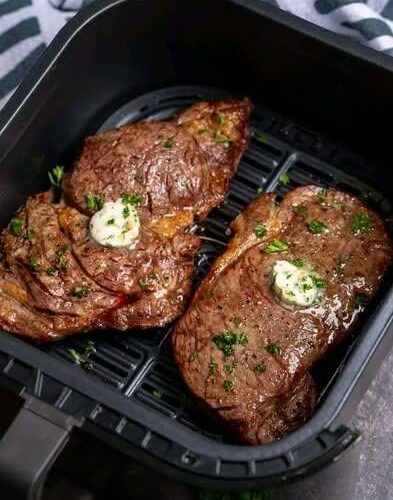
A good rib eye steak does not need a complicated marinade or a long list of ingredients. With a hot, heavy pan, a little neutral-flavored oil, butter, garlic, and fresh rosemary, you can turn a simple cut of beef into a deeply browned, juicy dinner with plenty of flavor.
The key is getting a good sear on the steak before finishing it with the garlic and rosemary butter. The butter is spooned over the meat while it cooks, giving the outside an extra layer of richness without taking away from the natural flavor of the rib eye.
This is the kind of steak that works well for an easy dinner but still feels special enough to serve when you want something a little more impressive.
What Makes Rib Eye a Good Choice?
- Rib eye is naturally rich and flavorful, which means it does not need much preparation. The marbling in the meat helps keep the steak juicy as it cooks, while the hot pan creates the browned crust on the outside.
- For this recipe, either boneless or bone-in rib eye steaks can be used. Bone-in steaks may need a little more cooking time, so it is better to rely on the internal temperature rather than the clock alone.
- The seasoning is kept simple: kosher salt and freshly ground black pepper. The garlic, butter, and rosemary are added later, once the steak has already developed its golden-brown crust.
Ingredients You Need
- For four servings, gather four rib eye steaks weighing about 10 to 12 ounces each. They can be boneless or bone-in.
- You will also need 1 1/2 tablespoons of neutral-flavored oil. Canola oil, safflower oil, grapeseed oil, or peanut oil are suitable choices. A neutral oil with a high smoke point is useful here because the pan needs to become very hot before the steaks go in.
- For seasoning, use kosher salt and freshly ground pepper to taste.
- The finishing ingredients are 4 tablespoons of butter, 4 smashed garlic cloves, and 4 fresh rosemary sprigs.
- There is no need to prepare a separate sauce. The butter, garlic, rosemary, and pan drippings come together directly in the skillet.
Before Cooking the Steaks
- Take the steaks out of the refrigerator and let them sit at room temperature for about 20 minutes. This gives them a chance to lose some of their chill before they hit the hot pan.
- While the steaks are resting, you can get the remaining ingredients ready. Have the oil, butter, smashed garlic cloves, and rosemary nearby so everything can be added quickly once the cooking starts.
- Patience at this stage makes the cooking process easier. Once the pan is hot, the steaks should go in without having to stop and measure or prepare other ingredients.
Season the Rib Eyes
- Season both sides of each steak generously with kosher salt and freshly ground pepper.
- There is no need for a marinade or complicated seasoning blend. Rib eye already has plenty of flavor, and the butter, garlic, and rosemary will add another layer as the steak finishes cooking.
- Make sure the seasoning is spread over both sides rather than concentrating it in one spot.
Choose a Heavy Pan
- A heavy pan is especially useful for this recipe because it holds heat well when the cold steaks are added. An enamel cast iron skillet or another heavy skillet works well, and a grill pan can also be used.
- Place the pan over high heat and let it become very hot before adding the oil.
- The high heat is important because it helps the steaks develop that deep golden-brown exterior. If the pan is not hot enough, the steak may cook without developing the same crust.
Searing the Steaks
- Once the pan is hot, add the neutral-flavored oil.
- Place the steaks in the pan in a single layer. Avoid crowding them together. Each steak should have enough room to make good contact with the hot cooking surface.
- Let the steaks cook for about 4 to 5 minutes on each side, or until they have developed a deep golden-brown crust.
- Try not to keep moving the steaks around while they are searing. The goal is to allow the surface to stay against the hot pan long enough to brown properly.
- If you are using bone-in rib eye steaks, remember that they can take a little longer to cook than boneless steaks.
Add the Garlic Butter
- Once the steaks have browned, add the butter to the pan.
- When the butter has melted, add the smashed garlic cloves and fresh rosemary sprigs. Stir everything together so the garlic and rosemary are coated in the melted butter.
- This is where the simple ingredients start to come together. The butter picks up the flavors from the garlic and rosemary while also mixing with the juices and browned bits already in the pan.
- Instead of preparing garlic butter separately, the steak is finished directly in this flavorful mixture.
- Spoon the Butter Over the Steak
- Use a spoon to scoop up the melted butter, garlic, and rosemary mixture from the pan and spoon it over the steaks.
- Continue cooking the steaks while repeatedly spooning the butter mixture over them. This helps coat the surface of the meat with the rich butter and herb flavor.
- At this stage, it is important not to rely only on cooking time to decide when the steak is ready. Steaks can vary in thickness, and bone-in cuts may cook differently from boneless ones.
- A digital meat thermometer makes it much easier to judge the doneness accurately.
- Checking the Internal Temperature
- Insert a probe thermometer into the thickest part of one of the steaks. For a medium steak, cook until the thermometer registers between 130 and 135 degrees F according to the provided cooking instructions.
- The steak can be removed from the pan before it reaches the final desired temperature because the meat will continue cooking as it rests.
- The temperature you choose depends on how you like your steak cooked.
Steak Temperature Guide
- Rare: 130 degrees F
- Medium Rare: 135 degrees F
- Medium: 145 degrees F
- Medium Well: 150 degrees F
- Well Done: 160 degrees F
- For the best texture, avoid cooking the steak beyond 150 degrees F if you want to keep it from becoming tough or dry.
Why Resting the Steak Matters
- When the steak reaches the appropriate temperature, remove it from the pan and let it rest for at least 5 minutes.
- It can be tempting to slice into a freshly cooked steak right away, but giving it a few minutes to rest is worth it. The steak continues cooking slightly after it comes off the heat, which is why removing it a few degrees before the final desired temperature is useful.
- Resting also gives you a short window to get your plates or side dishes ready before serving.
Finish with the Pan Drippings
- After the steak has rested, spoon some of the pan drippings over the top.
- The drippings contain the melted butter along with the flavors of the garlic and rosemary and the juices left behind by the steak. Pouring them over the meat keeps the finishing step simple while adding plenty of flavor.
- Slice the steak and serve it immediately.
Tips for Getting a Good Crust
- The pan makes a big difference when cooking rib eye. A heavy skillet is a good choice because it retains heat well and helps the steak brown properly.
- An enamel cast iron skillet is recommended, although a grill pan can also be used.
- The oil should have a neutral flavor and a high smoke point. Canola oil is one option, while safflower oil, grapeseed oil, corn oil, and peanut oil can also be used.
- The pan should be very hot before the steaks are added. Once the steaks are in the skillet, give them enough time to brown deeply on each side.
- The goal is a golden-brown to deep golden-brown crust rather than simply cooking the meat through.
Boneless or Bone-In Rib Eye?
- Both types work for this recipe.
- Boneless rib eye steaks are straightforward to cook and can be easier to portion and slice. Bone-in rib eye has the bone attached and may require additional cooking time.
- If using bone-in steaks, use the thermometer to check the thickest part of the meat and adjust the cooking time as needed.
- The important thing is to judge doneness by temperature rather than assuming every steak will take exactly the same amount of time.
- Choosing the Herbs
- Garlic and rosemary are used in this version, and their flavor works particularly well with the richness of rib eye.
- If you want to change the herb flavor while keeping the same cooking method, other herbs such as thyme, sage, parsley, marjoram, or fresh basil can be used. Basil can be added as a finishing touch toward the end of cooking.
- The herb does not need to be turned into a separate sauce. It can simply flavor the butter in the pan as the steak finishes cooking.
- Serving the Steak
- Rib eye is best served immediately after resting and slicing.
- Because the steak is rich on its own, it pairs well with a range of sides. Baked potatoes, potato wedges, roasted broccoli, vegetable salad, cowboy beans, and cornbread puddings all make suitable additions to the meal.
- You can keep the rest of the plate simple and let the steak remain the main part of the dinner.
- Storing Leftovers
- This steak is best when served right away, but cooked leftovers can be stored in the refrigerator for up to 3 days.
- When reheating leftover steak, take care not to overcook it. Since the meat has already been cooked once, reheating it too aggressively can make it tougher and drier.
- For the best result, use gentle reheating and serve the leftovers as soon as they are warmed through.
A Simple Steak Dinner
- There is something satisfying about a recipe that gets most of its flavor from a handful of basic ingredients. Rib eye already brings richness to the plate, while the hot pan creates the crust and the garlic, rosemary, and butter provide the finishing flavor.
- The process is straightforward: bring the steaks to room temperature, season them, sear them in a very hot heavy pan, finish them with garlic butter and rosemary, check the temperature, and let them rest.
- The most important part is not rushing the final steps. Give the steaks enough time to brown, use a thermometer to check the center, and let the cooked meat rest for at least five minutes before slicing.
- With those simple steps, the result is a tender, juicy rib eye with a beautifully browned exterior and a buttery garlic-herb finish.
Description
- Tender and juicy rib eye steaks seared in a hot heavy pan until deeply golden brown, then finished with melted butter, garlic, and fresh rosemary. A simple preparation with a rich, buttery finish.
Duration
- Prep Time: 10 minutes
- Cook Time: 15 minutes
- Total Time: 25 minutes
Ingredients
- 4 rib eye steaks, 10–12 ounces each, boneless or bone-in
- 1 1/2 tablespoons neutral flavored oil, such as safflower oil, canola oil, grapeseed oil, or peanut oil
- Kosher salt and freshly ground pepper, to taste
- 4 tablespoons butter
- 4 garlic cloves, smashed
- 4 sprigs fresh rosemary
Instructions
- Let the steaks sit at room temperature for 20 minutes.
- Season both sides of the steaks with kosher salt and freshly ground pepper.
- Heat a heavy pan, such as an enamel cast iron skillet, over high heat.
- Add the oil to the hot pan and place the steaks in a single layer.
- Cook for 4–5 minutes per side, or until deeply golden brown.
- Add the butter to the pan. Once melted, add the smashed garlic cloves and rosemary. Stir to combine.
- Spoon the melted butter mixture over the steaks as they continue cooking.
- Insert a probe thermometer into the thickest part of one steak.
- Cook for another 2–3 minutes, or until the thermometer registers 130–135°F for a medium steak.
- Remove the steaks from the pan and let them rest for 5 minutes.
- Spoon the pan drippings over the steaks, then slice and serve immediately.
Notes
- Use a heavy pan for the best crust. An enamel cast iron skillet or grill pan works well.
- Both boneless and bone-in rib eye steaks can be used. Bone-in steaks may take a little longer to cook.
- A neutral-flavored oil with a high smoke point is best for searing. Canola, grapeseed, safflower, corn, and peanut oil are suitable choices.
- For other herb options, use thyme, sage, parsley, marjoram, or fresh basil.
- Use a digital meat thermometer to check doneness.
- Remove the steak from the heat a few degrees before the desired final temperature because it will continue cooking while resting.
- Let the steak rest for at least 5 minutes before slicing.
- Cooked leftovers can be refrigerated for up to 3 days. Reheat carefully to avoid overcooking the meat.
Nutrition Information
- Per serving:
- Calories: 577 kcal
- Carbohydrates: 1 g
- Protein: 31 g
- Fat: 26 g
- Saturated Fat: 20 g
- Cholesterol: 149 mg
- Sodium: 184 mg
- Potassium: 529 mg
- Fiber: 1 g
- Sugar: 1 g
- Vitamin A: 350 IU
- Vitamin C: 1 mg
- Calcium: 21 mg
- Iron: 4 mg
