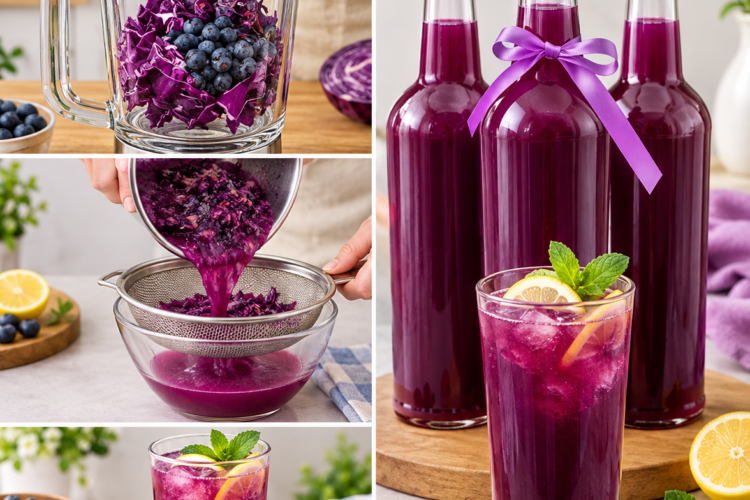
Grape juice is one of those drinks that feels special even though it is incredibly simple to make. When the weather is hot and you have a bunch of fresh, naturally sweet grapes in the kitchen, there is really no need to bring out a complicated juicer. A blender, a strainer and a few basic ingredients are enough to make a refreshing glass of grape juice at home.
This recipe is especially convenient because the grapes are simply blended, strained and adjusted according to taste. There is no cooking involved, so the whole process is quick. Once the grapes are washed and ready, the juice can be prepared in around 15 minutes.
I like using seedless black grapes for this recipe because they give the juice a lovely deep color and naturally sweet flavor. Green seedless grapes work just as well. The important thing is to taste the grapes before adding anything else. If they are already sweet, there is no reason to add extra sugar or jaggery.
A little lemon juice can be added when you want to balance the sweetness with some tanginess. Black salt is also optional and gives the finished drink a slightly savory edge.
Why Make Grape Juice in a Blender?
- A blender makes this recipe particularly easy. There is no need for a special electric juicer or a collection of parts that need to be washed afterward.
- The grapes go straight into the blender jar. After blending them until smooth, the mixture is passed through a strainer to separate the juice from the pulp. Pressing the pulp with a spoon helps extract as much juice as possible.
- The result is a fresh homemade drink without a complicated preparation process.
- The texture of freshly blended grape juice can be somewhat thick, especially when the grapes are very juicy and sweet. If you prefer a lighter drink, simply add some water. Ice cubes can also be used when serving if you want the juice chilled.
Choosing the Grapes
- The quality and sweetness of the grapes make a noticeable difference in the final drink.
- For this recipe, you can use 500 to 550 grams of black grapes or green grapes that are seedless. Organic grapes are preferable when available.
- Black grapes are a particularly good choice when you want a strongly colored juice with a rich grape flavor. Green grapes can produce a lighter-colored juice with their own naturally sweet and refreshing taste.
- Since grape varieties vary in sweetness, it is better not to automatically add sugar. Blend and taste the juice first. If the grapes are naturally sweet, you can enjoy the juice without any additional sweetener.
- On the other hand, if the grapes are a little tart or lack sweetness, raw sugar or powdered jaggery can be added as needed.
Washing the Grapes Properly
- Before blending, the grapes need to be washed well.
- If you are using organic grapes, rinse them thoroughly several times under water using a mesh strainer or colander. Let the excess water drain completely before putting the grapes into the blender.
- For non-organic grapes, rinse them thoroughly under running water first. They can then be soaked in a vinegar-and-water solution for about five minutes. After soaking, rinse them twice more with water using a strainer or colander.
- This extra step is useful when you want to clean the grapes thoroughly before turning them into juice.
- Once the grapes have been washed and drained, they are ready to blend.
Blending the Grapes
- Place the cleaned grapes in the blender jar. Blend them until they become a fine mixture, making sure there are no noticeable chunks remaining.
- There is no cooking or heating involved in this recipe. The grapes are simply blended in their fresh state.
- If your grapes are very juicy, you may find that they blend easily without additional water. There is also no need to add water before blending unless necessary for your particular blender.
- The goal is to break down the grapes well so that the juice can be extracted easily during straining.
Straining the Juice
- After blending, place a strainer over a bowl and pour the grape mixture into it.
- Use a spoon to press the pulp firmly against the strainer. This helps release the extra juice trapped in the blended grapes.
- Take your time with this step rather than simply allowing the mixture to drain on its own. Pressing the pulp well helps you get more juice from the grapes and leaves behind the thicker portion of the pulp.
- Once the juice has been strained, you can discard the remaining pulp or use it in another preparation if you have a suitable use for it.
Adjusting the Flavor
- This is where the recipe can be adjusted according to the grapes you have.
- Start by tasting the strained juice. If the flavor is already sweet and balanced, you can serve it as it is.
- If the juice tastes very strong or concentrated, add some water as needed. A few ice cubes can also help mellow the flavor while chilling the drink at the same time.
- For grapes that are not particularly sweet, add raw sugar or powdered jaggery according to taste. There is no fixed amount because the sweetness of grapes can vary considerably.
- A little lemon juice is another simple way to balance the drink. The recipe uses 1 teaspoon of lemon juice or as required, and it is optional. You can add it when you feel the grape juice needs a little brightness or tang.
Adding Black Salt
- Black salt is completely optional, but it can change the character of the juice.
- After pouring the grape juice into glasses or mugs, you can sprinkle a pinch of black salt into each glass. The recipe calls for 2 to 3 pinches of black salt, though it does not have to be used if you prefer plain grape juice.
- If the grapes are already very sweet, the slight savory note from black salt can make the drink taste more balanced.
- For a simple version, however, you can leave it out and enjoy the natural grape flavor.
How to Make the Juice Extra Cold
- There are two easy ways to serve this grape juice cold.
- The first is to add a few ice cubes directly to the glasses before serving. This immediately chills the drink and slightly dilutes the concentrated grape flavor.
- The second option is to add a little cold water to the strained juice. This is useful if you already find the juice too strong or thick.
- If you prefer a stronger grape flavor, use less water and fewer ice cubes. If you prefer a lighter and more refreshing drink, add more water according to your taste.
Other Ways to Add Flavor
- The basic recipe is intentionally simple, but the notes also give a few optional ways to introduce additional flavors.
- A few pinches of crushed black pepper can add some gentle spice. Cayenne pepper can also be used if you like a little heat.
- Ginger is another option. About ½ teaspoon of chopped ginger can be added while blending the grapes.
- These additions are not necessary for a basic grape juice. The grapes, lemon juice and optional black salt are enough to make a refreshing drink. The extra spices are simply possibilities when you want something slightly different.
Black Grapes or Green Grapes?
- Both varieties can be used successfully.
- Black grapes are a great choice when you want a darker, richer-looking juice. Green grapes provide another option and can be used in the same basic method.
- Because different grapes have different levels of sweetness, the most useful approach is to taste the juice after straining and then decide whether it needs sweetener, lemon juice or water.
- This keeps the recipe flexible without making unnecessary changes to the natural flavor of the fruit.
When to Serve Grape Juice
- Fresh grape juice is particularly enjoyable on a hot day. It can be served immediately after preparation, either plain or over ice.
- Since there is no cooking involved, the juice retains the fresh character of the grapes. It also makes a simple homemade alternative when you want a refreshing fruit drink without spending much time in the kitchen.
- For the best taste, serve it as soon as it is prepared.
- If you are not serving it immediately, it can be refrigerated and consumed within a few hours. However, freshly made juice is preferable.
A Few Things to Keep in Mind
- The first thing is not to add sugar automatically. Grapes can be surprisingly sweet, particularly when they are fresh and ripe. Taste first and sweeten only if needed.
- The second is to pay attention to the strength of the juice. Some grapes produce a very concentrated drink. Water or ice cubes can be added to make it lighter.
- Lemon juice should also be added according to taste. A small amount can provide a pleasant tang and help balance sweetness, but it is optional.
- Black salt is another optional ingredient. If you do not have it or simply prefer a naturally sweet grape drink, it can be skipped.
- Finally, freshly prepared grape juice is best enjoyed immediately.
Serving the Homemade Grape Juice
- Once the juice has been strained and adjusted, pour it into glasses or mugs.
- For a chilled drink, add ice cubes. You can also garnish the glasses with a few grapes or some mint leaves for a simple presentation.
- There is no need for an elaborate garnish. The natural color of grape juice already makes it an attractive drink.
- Serve it immediately and enjoy the fresh flavor.
Description
- Fresh homemade grape juice made with seedless black or green grapes in a blender. The grapes are blended, strained and adjusted with lemon juice, black salt, sweetener or water according to taste. It is quick, refreshing and requires no cooking.
Duration
- Prep Time: 15 minutes
- Cook Time: 0 minutes
- Total Time: 15 minutes
Ingredients
- 500 to 550 grams black grapes or green grapes (seedless), preferably organic
- 1 teaspoon lemon juice or add as required, optional
- 2 to 3 pinches black salt, optional
- Raw sugar or powdered jaggery, as required, optional
- Water, as needed, optional
Instructions
- Rinse the grapes thoroughly several times in water using a mesh strainer or colander. Drain well.
- Transfer the cleaned grapes to a blender and blend until smooth, making sure there are no chunks.
- Pour the blended grapes through a strainer placed over a bowl.
- Press the grape pulp firmly with a spoon to extract as much juice as possible.
- Taste the strained juice. If it is too strong, add water as needed.
- If the grapes are not sweet enough, add raw sugar or powdered jaggery according to taste.
- Add lemon juice for a little tang and stir well.
- Pour the juice into glasses or mugs.
- Sprinkle a pinch of black salt into the glasses if desired.
- Serve immediately, with or without ice cubes. Garnish with grapes or mint leaves if desired.
Notes
- Organic grapes are preferable. For non-organic grapes, rinse them thoroughly, soak them in a vinegar-and-water solution for about 5 minutes, then rinse twice more with water.
- Black salt can be skipped.
- For extra flavor, add a few pinches of crushed black pepper or cayenne pepper, or about ½ teaspoon chopped ginger while blending.
- Add ice cubes or cold water for a colder, lighter juice.
- The juice tastes best when freshly prepared. If necessary, refrigerate it and consume it within a few hours.
Nutrition Information
- Calories: 143 kcal
- Carbohydrates: 35 g
- Protein: 2 g
- Fat: 1 g
- Sodium: 390 mg
- Potassium: 510 mg
- Fiber: 10 g
- Sugar: 0.1 g
- Vitamin A: 168 IU
- Vitamin C: 1 mg
- Vitamin E: 0.01 mg
- Calcium: 93 mg
- Vitamin B9 (Folate): 6 µg
- Iron: 1 mg
- Magnesium: 35 mg
- Phosphorus: 60 mg
- Zinc: 0.3 mg
