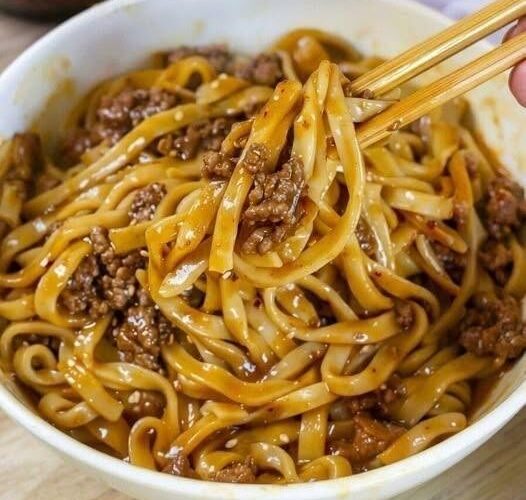
Mongolian Beef Noodles are the kind of dinner that can make a regular weeknight feel a little more special without requiring hours in the kitchen. The combination of tender, seared beef, chewy lo mein noodles, and a sweet-savory sauce comes together surprisingly quickly. The sauce has a nice balance from the low-sodium soy sauce, hoisin sauce, brown sugar, rice vinegar, garlic, ginger, and chili sesame oil.
The whole dish takes around 30 minutes from start to finish, which is one of the reasons it works so well for a busy evening. There is no need to prepare a complicated marinade or spend a long time cooking the beef. The steak is simply coated with cornstarch and quickly seared in a hot skillet. Once the sauce goes into the pan, everything comes together in just a few more minutes.
I like to get all of the ingredients ready before I start cooking because the beef cooks quickly, and once the sauce is in the skillet, the noodles and steak need only a little time to come together.
Why This Recipe Works
- There are a few simple things that make these noodles especially good.
- First, the beef is sliced thinly against the grain. This makes a big difference in the texture. Thin slices cook quickly, and cutting against the grain helps keep the steak easier to bite through.
- The cornstarch coating is another important step. It gives the beef a light coating that helps it brown nicely in the skillet. It also works well with the sauce once everything is tossed together.
- The sauce itself is where most of the flavor comes from. Soy sauce brings saltiness and depth, while brown sugar adds sweetness. Hoisin sauce gives the sauce a richer flavor, and rice vinegar keeps the sweetness from becoming too heavy. Garlic and fresh ginger add the savory, aromatic flavor you expect from this style of noodle dish.
- The chili sesame oil adds a little heat. If you prefer a milder dinner, regular sesame oil can be used instead.
Getting the Noodles Ready
- Start with the lo mein noodles. Bring a pot of water to a boil and cook the noodles according to the package directions.
- Once they’re cooked, rinse them under cold water. This stops the cooking process and helps keep them from becoming too soft while you prepare the rest of the meal.
- I also like to toss the noodles with a small amount of sesame oil or neutral oil after rinsing. This helps prevent them from sticking together while they sit.
- Set the noodles aside while the beef is prepared.
- There is no need to cook the noodles again separately later. They’ll have a chance to warm through and absorb some of the sauce when everything is combined in the skillet.
Preparing the Beef
- The steak should be thinly sliced against the grain. Flat iron steak works particularly well here because it has a slightly buttery texture and is often a more budget-friendly choice than some other cuts of steak.
- Sirloin can also be used.
- Once the steak is sliced, sprinkle the cornstarch over it and gently toss everything together. The goal is simply to coat the slices evenly. You don’t need a thick layer of cornstarch.
- Make sure the beef is separated as much as possible before it goes into the skillet. This gives the pieces more contact with the hot surface and helps them sear rather than steam.
Searing the Steak
- Heat a large skillet over medium-high heat and add one tablespoon of vegetable oil.
- For the best results, don’t put all of the steak into the skillet at once. Cook half of the slices in the first batch.
- Let the beef sear for about 1–2 minutes per side. Since the slices are thin, they don’t need a long time in the skillet.
- Once the first batch is cooked, remove it from the pan and set it aside. Add the remaining tablespoon of vegetable oil and cook the second batch in the same way.
- Cooking the steak in two batches gives the beef enough room to brown properly. Crowding the pan can cause the meat to release moisture and makes it harder to get that nice seared surface.
- When all the beef is cooked, remove it from the skillet and lower the heat to medium-low.
Making the Sauce
- While the skillet is still warm, prepare the sauce mixture.
- In a small bowl, whisk together the low-sodium soy sauce, hoisin sauce, water, light brown sugar, rice vinegar, and chili sesame oil.
- The mixture will be fairly thin at first, but that’s exactly what you want. It will simmer briefly in the skillet and coat the noodles and beef once everything is added.
- Pour the sauce into the skillet, then add the minced garlic, grated fresh ginger, and sliced green onions.
- Let the mixture simmer for 1–2 minutes.
- This short simmer gives the garlic and ginger time to release their flavor while the sauce warms through.
Bringing Everything Together
- Once the sauce has simmered, add the cooked noodles and seared beef directly to the skillet.
- Use tongs or another large utensil to gently toss everything together. Take your time here so the sauce gets distributed throughout the noodles instead of staying mostly at the bottom of the skillet.
- The noodles will absorb some of the sauce fairly quickly. Keep tossing until the beef and noodles are evenly coated.
- Let everything cook together for another 1–2 minutes, stirring as needed.
- You don’t want to leave the noodles over the heat for too long. The goal is simply to warm everything through and allow the sauce to cling to the noodles and beef.
Serving the Noodles
- These Mongolian Beef Noodles are best served hot, right after cooking.
- Divide the noodles between bowls and finish with extra sliced green onions. Sesame seeds can also be sprinkled over the top if desired.
- The finished dish has a combination of savory, sweet, slightly tangy, and gently spicy flavors. The beef provides a hearty bite, while the noodles soak up the sauce and make the meal filling enough to serve on its own.
Choosing the Right Steak
- Flat iron steak is a great option for this recipe. It has a tender, slightly buttery texture and works particularly well when sliced thinly.
- If flat iron steak isn’t available, sirloin can be used instead.
- Skirt steak or flank steak are also options if that’s what you have available. Whichever cut you choose, the important thing is to slice the meat thinly and against the grain.
- That small step helps make the finished beef much more tender and enjoyable to eat.
Can You Make It Without Beef?
- Yes. The steak isn’t absolutely necessary if you want to make a meatless version or simply don’t have beef available.
- Ground beef can also be used when that is a more convenient or affordable option. The texture will obviously be different from thinly sliced steak, but the sauce and noodles still work well together.
- If using another type of beef, the same general idea applies: cook the meat, remove it from the skillet, prepare the sauce, and then bring everything together with the noodles.
Adding Vegetables
- This recipe can easily be turned into a more vegetable-filled meal.
- Broccoli, bell peppers, snap peas, and carrots are all good choices. If you’re adding vegetables, stir-fry them after the beef has been cooked and removed from the skillet, but before adding the sauce.
- That keeps the vegetables from becoming overly soft while still giving them enough time to cook.
- You don’t need to change the sauce just because you’re adding vegetables. Keep in mind, though, that adding a large amount of vegetables will increase the overall volume of the dish.
If You Like Extra Sauce
- The noodles absorb sauce quickly, so if you prefer a particularly saucy noodle dish, the sauce can be doubled.
- Another helpful trick is to add the beef to the sauce first and coat it well before adding the noodles. Once the noodles go into the skillet, they’ll begin absorbing the sauce almost immediately.
- This method makes it easier to get plenty of flavor onto the beef while still keeping the noodles well coated.
Choosing Different Noodles
- Lo mein noodles are the natural choice here, but they aren’t the only option.
- Udon noodles, rice noodles, spaghetti, or even fettuccine can be used if that’s what you have available.
- Each type will give the dish a slightly different texture, but the sauce works well with several kinds of noodles.
- If substituting noodles, cook them according to their package instructions and rinse them under cold water when appropriate before adding them to the skillet.
Adjusting the Heat
- The chili sesame oil gives the dish a little heat along with sesame flavor.
- For a milder version, use regular sesame oil instead. If you don’t care for sesame flavor, the chili sesame oil can simply be left out.
- For more heat, add extra chili sesame oil, a squeeze of sriracha, or some red pepper flakes to taste.
- It’s easiest to adjust the spice toward the end rather than making the entire sauce very spicy from the beginning.
What to Do If You Don’t Have Hoisin Sauce
- Hoisin sauce adds a distinctive sweet and savory flavor, but if you don’t have it on hand, there are a couple of options.
- You can make the noodles using the soy sauce and brown sugar already called for in the recipe, or you can make a quick homemade substitute.
- For the homemade version, combine:
- 3 Tablespoons soy sauce
- 1 Tablespoon smooth peanut butter
- 1 Tablespoon brown sugar
- 2 teaspoons rice vinegar or apple cider vinegar
- 1 teaspoon sesame oil
- 1 clove garlic, minced, or 1/4 teaspoon garlic powder
- 1/4 teaspoon onion powder
- Optional: 1/4 teaspoon Chinese five spice
- Optional: 1/2 teaspoon sriracha or hot sauce
- Whisk everything together in a small bowl until smooth. Taste it and adjust the sweetness, saltiness, or spice if needed.
- It can be used right away or kept in an airtight container in the refrigerator for up to one week.
Making the Meal Ahead
- This dish is best when served immediately because the noodles continue to absorb the sauce as they sit.
- If you do have leftovers, though, they reheat well. Store them in the refrigerator for up to three days.
- When reheating, use either the skillet or microwave. If the noodles seem a little dry after refrigeration, adding a small amount of soy sauce can help bring some flavor and moisture back.
A Few Helpful Cooking Tips
- Slice the beef thinly. Thick pieces take longer to cook and won’t have the same texture as the thin slices used in this recipe.
- Cut against the grain. Look at the direction of the muscle fibers and slice across them rather than along them.
- Don’t overcrowd the skillet. Cooking the beef in two batches gives it more room to sear.
- Keep an eye on the noodles. Once they’re added to the sauce, they don’t need much time. A minute or two is enough to warm everything together.
- Have the sauce ingredients ready. The sauce comes together quickly, so measuring everything before starting makes the cooking process much easier.
- Serve right away. The noodles are at their best when they’re hot and freshly coated in the sauce.
The Finished Dish
- Once everything has been tossed together, you should have glossy noodles coated in the sweet and savory sauce, with pieces of seared beef throughout.
- The combination is simple but satisfying. There’s enough flavor in the sauce that you don’t need a long list of additional ingredients or complicated cooking steps.
- It’s also the kind of recipe that can be adjusted depending on what’s available in the kitchen. Different steak cuts can work, several types of noodles can be substituted, vegetables can be added, and the heat can be increased or reduced.
- For a quick dinner, the basic version is more than enough: cook the noodles, sear the beef, simmer the sauce, and toss everything together.
- The most important thing is to serve the noodles while they’re hot, when the beef is freshly cooked and the sauce is still coating every strand.
Description
- Tender slices of seared beef and lo mein noodles tossed in a sweet, savory sauce made with low-sodium soy sauce, hoisin sauce, brown sugar, garlic, ginger, rice vinegar, and chili sesame oil. A quick dinner that comes together in about 30 minutes.
- Prep Time: 10 minutes
Cook Time: 18 minutes
Total Time: 28 minutes
Servings: 2
Course: Dinner, Main Course
Cuisine: American
Ingredients
- 8 ounce package lo mein noodles
- 2 Tablespoons cornstarch
- ¾ pound flat iron steak or sirloin, thinly sliced against the grain
- 2 Tablespoons vegetable oil, divided
- ¼ cup low-sodium soy sauce
- 2 Tablespoons hoisin sauce
- ¼ cup water
- 2 Tablespoons light brown sugar
- 1 Tablespoon rice vinegar
- 1 teaspoon chili sesame oil (or regular for no heat – optional)
- 3 cloves garlic, minced
- 1 Tablespoon grated fresh ginger (can use more or less to taste)
- ¼ cup sliced green onions, plus more for garnish
- Sesame seeds, optional, for garnish
Instructions
- Cook the lo mein noodles according to the package instructions. Rinse under cold water to stop the cooking process. Toss with a little sesame oil or neutral oil to prevent sticking, then set aside.
- Sprinkle the cornstarch over the thinly sliced steak and gently toss until the beef is evenly coated.
- Heat a large skillet over medium-high heat and add 1 Tablespoon vegetable oil. Cook half of the steak for about 1–2 minutes per side. Remove from the skillet.
- Add the remaining 1 Tablespoon vegetable oil and cook the remaining steak. Remove the beef from the skillet and lower the heat to medium-low.
- In a small bowl, whisk together the soy sauce, hoisin sauce, water, brown sugar, rice vinegar, and chili sesame oil.
- Pour the sauce into the skillet. Add the minced garlic, grated ginger, and sliced green onions. Simmer for 1–2 minutes.
- Add the cooked noodles and steak to the skillet. Gently toss until everything is evenly coated in the sauce.
- Continue cooking and stirring for another 1–2 minutes, just until everything is heated through and well coated.
- Serve hot and garnish with additional green onions and sesame seeds, if desired.
Notes
- Flat iron steak or sirloin can be used. Skirt steak or flank steak can also work.
- For a meatless version, leave out the steak. Ground beef can also be used.
- Add broccoli, bell pepper, snap peas, or carrots by stir-frying them after the beef and before adding the sauce.
- For extra-saucy noodles, double the sauce and coat the beef in the sauce before adding the noodles.
- Udon, rice noodles, spaghetti, or fettuccine can be used instead of lo mein noodles.
- For more heat, add extra chili sesame oil, sriracha, or red pepper flakes.
- Regular sesame oil can be used instead of chili sesame oil for a non-spicy version.
- Leftovers can be refrigerated for up to 3 days and reheated in a skillet or microwave. A little extra soy sauce can help refresh the noodles when reheating.
Nutrition
- Calories: 949 kcal
- Carbohydrates: 112 g
- Protein: 46 g
- Fat: 34 g
- Sodium: 1,886 mg
- Fiber: 3 g
- Sugar: 17 g
