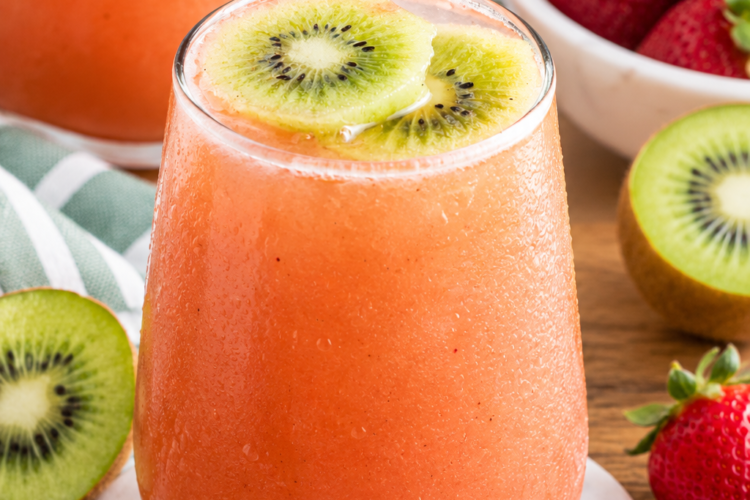
When I want something cold, fresh, and easy to make, strawberry kiwi juice is one of those drinks I can put together without much planning. The combination of ripe strawberries and kiwi gives the juice a lovely balance of sweetness and tanginess. Strawberries bring a naturally sweet flavor, while kiwi adds a bright, slightly sour taste that keeps the drink refreshing.
The best part is that there is very little preparation involved. I only need fresh strawberries, ripe kiwis, and a blender or juicer. If I am using a blender, I can decide whether I want the juice smooth or with some of the natural fruit pulp left in it.
This is especially nice on a warm day when I want something fresh instead of a heavy drink. I also like that the juice can be served in different ways. It can be enjoyed straight after making it, diluted with water or coconut water, or used as a base for a slushie or popsicle.
Why Strawberries and Kiwi Work So Well Together
- Strawberries and kiwi have very different flavors, but that is exactly what makes them such a good combination.
- Ripe strawberries have a soft, sweet flavor and plenty of natural juiciness. Kiwi, on the other hand, has a sharper and more refreshing taste. When blended or juiced together, the sweetness of the strawberries helps balance the tartness of the kiwi.
- The result is a drink that is neither overly sweet nor too sour. The fruit also gives the juice a naturally bright appearance, making it a simple drink that feels a little special when served cold over ice.
- I prefer using ripe fruit because both strawberries and kiwi taste much better when they have had enough time to develop their natural sweetness.
What You Need
The base of this juice is very simple:
- 1.1 lb strawberries
- 1.44 lb kiwis
- That is all that is needed for the basic strawberry kiwi juice.
- The strawberries should be fresh and ripe. They should smell fruity and have a good color without looking spoiled or overly soft.
- For the kiwi, choose fruit that is ripe enough to give slightly when gently pressed. Very firm kiwi can be quite sour and may not give the same smooth flavor as ripe fruit.
- There are also several optional ways to serve or adjust the juice, but none of these are necessary for the basic recipe.
Preparing the Fruit
- I start by washing and preparing both fruits before blending or juicing them.
- For the kiwi, the skin can be removed if preferred. Another option is to clean the kiwi skin and gently rub away some of the fine hairs using the rough side of a clean, damp sponge. After that, I slice away the ends of the kiwi and cut the fruit into smaller pieces.
- When using a juicer, I cut the kiwi into pieces that will fit comfortably through the chute.
- For the strawberries, I clean them well and remove any unwanted parts. The strawberry stems are edible, so they can be left on if desired. If I want a cleaner preparation, I can simply slice them off.
- Once everything is cleaned and chopped, the fruit is ready to turn into juice.
Making Strawberry Kiwi Juice in a Blender
- A blender is probably the easiest option if a juicer is not available. I like this method because I can control the texture of the finished drink.
Blend the Strawberries
- I place the prepared strawberries into the blender and blend until they become smooth.
- There is no need to add anything immediately. The strawberries contain enough moisture to blend into a thick, juicy mixture.
- If using an immersion blender, the strawberries can be placed into a suitable bowl or container and blended there.
- Once smooth, I set the strawberry mixture aside while preparing the kiwi.
Blend the Kiwi
- Next, I blend the prepared kiwi until smooth.
- Kiwi can produce a thicker mixture than some other fruits, so I make sure it is blended well before combining it with the strawberries.
- At this point, I have two separate fruit mixtures. Keeping them separate while blending makes it easy to combine them afterward and also allows me to see the texture of each fruit.
Combine the Two Juices
- Once both fruits are blended, I combine the strawberry and kiwi mixtures.
- I give everything a good stir so the flavors are evenly distributed.
- For a thicker, pulpy drink, I can serve it just as it is. This version keeps more of the natural fruit texture and fiber.
- If I prefer a smoother juice, I strain the mixture through a fine-mesh sieve. A cheesecloth or nut milk bag can also be used if I want to remove more of the pulp.
- The choice really comes down to texture. I find that both versions are refreshing, so there is no right or wrong way to do it.
Adjusting the Consistency
- The finished juice can be served as a concentrated fruit drink, or it can be diluted if the flavor feels too strong.
- Still water, sparkling water, or coconut water can be used for dilution. Tonic water is another option when a slightly different flavor is wanted.
- I would add the liquid gradually rather than all at once. That way, it is easier to keep the strawberry and kiwi flavor from becoming too weak.
- If the fruit is naturally very ripe and sweet, there may be no need to add anything at all.
Making It With a Juicer
- If I am using a juicer, the process is even more straightforward.
- After cleaning and preparing the fruit, I cut the strawberries and kiwis into pieces that are suitable for the juicer chute.
- The prepared fruit can then go directly into the juicer.
- The kiwi skin and strawberry stems can be left on when juicing if preferred. However, the fruit should always be cleaned properly before going into the machine.
- I juice the fruit and combine the resulting juices.
- There is no need to blend the fruits separately when using a juicer. The juicer handles the extraction, leaving a thinner juice compared with the blended version.
- The finished juice can be served immediately for the freshest flavor.
Smooth or Pulpy?
- One of the easiest things to change about this recipe is the texture.
- If I leave the juice pulpy, I get more of the natural fruit material in the drink. This gives it a thicker texture and a more noticeable fruit character.
- For a smooth juice, I simply strain the blended mixture.
- If there is leftover pulp after straining, I do not necessarily throw it away. It can be saved and added to smoothies or baked recipes such as bread and muffins. It can also be composted. If there is quite a bit of pulp, it can be frozen in ice cube trays and used later.
Easy Ways to Serve It
- Fresh strawberry kiwi juice is delicious on its own, especially when chilled.
- I can pour it into a glass and serve it immediately, or add ice for an extra-cold drink.
- For a lighter drink, I can top it with still or sparkling water. Coconut water works particularly well when I want a milder fruit drink.
- The juice can also be poured into popsicle molds and frozen. It can be kept as one combined flavor or the strawberry and kiwi mixtures can be layered separately for a different appearance.
- Another easy option is to turn it into a slushie. Fresh fruit can be blended with ice, or frozen strawberries and kiwi can be used with a little water.
Optional Sweetener
- I generally find that ripe strawberries provide enough sweetness for this juice. However, the final flavor depends on how ripe the fruit is.
- If the kiwi is particularly tangy or the strawberries are not very sweet, a little natural sweetener can be added.
- Maple syrup, agave, or honey are possible choices. A vegan honey-style sweetener can also be used.
- I recommend tasting the juice first and adding sweetener only if it is actually needed.
Add Lemon or Lime
- A small amount of lemon or lime juice can make the drink taste even fresher.
- The citrus works especially well with the tart kiwi and sweet strawberries. I would add it gradually so it does not overpower the fruit.
- This combination can also be used as the starting point for a strawberry kiwi lemonade or limeade.
Add Other Fruits and Vegetables
- There are plenty of ways to build on the basic strawberry kiwi combination.
- Celery, cucumber, and apple can be added or used to dilute the juice while bringing their own flavors and nutrients.
- Sweet melons such as watermelon and cantaloupe also pair nicely with strawberry and kiwi.
- If I want to add a fresh herbal note, mint or basil works well. A small amount of thyme can also be used.
- These additions are optional, though. The basic strawberry kiwi juice already has plenty of flavor without them.
Strawberry Kiwi Smoothie
- The same fruit combination can also be turned into a smoothie.
- Instead of keeping the mixture thin like juice, I can blend the strawberries and kiwi with a frozen banana and yogurt.
- Natural dairy yogurt or dairy-free coconut yogurt can both work. A little orange juice can be added for another layer of fruit flavor, while vanilla can give the smoothie a warmer taste.
- The smoothie will naturally be thicker and more filling than the juice.
Strawberry Kiwi Slushie
- For hot days, the fruit can easily become a frozen-style drink.
- I can use fresh fruit with ice cubes and blend everything until slushy. Frozen strawberries and kiwi can also be used, with a little water added as needed to help everything blend.
- If the fruit is quite tart, a small amount of natural sweetener or simple syrup can be added.
- The goal is to blend only until the mixture reaches a cold, slushy consistency rather than making it completely liquid.
How to Store Strawberry Kiwi Juice
- Fresh juice is best enjoyed soon after it is made. For the best freshness and flavor, I prefer drinking it within a few hours.
- If there are leftovers, they can be transferred to a covered container and kept in the refrigerator for about 2 to 3 days.
- If the juice contains natural pulp, the pulp may separate from the liquid while it sits. This is completely normal. I simply shake or stir the juice before serving it again.
Freezing the Juice
- Freezing is a useful way to save extra juice instead of letting it go to waste.
- For convenient portions, I like the idea of freezing the juice in ice cube trays. Once frozen, the cubes can be transferred to a suitable freezer container.
- The frozen juice can be kept for up to 2 months.
- The cubes can later be added directly to smoothies or slushies. They can also be allowed to thaw in the refrigerator if I want to drink the juice normally.
- Freezing the juice soon after making it is preferable if I want to preserve its freshness as much as possible.
A Few Things That Make the Recipe Easier
- The most important thing is using ripe fruit. Since there are only two main ingredients, their flavor has a big effect on the finished drink.
- I also like tasting the juice before adding any sweetener or extra liquid. Strawberries and kiwi can vary quite a bit in sweetness and tartness, so there is no need to automatically add anything.
- If I am using a blender and want a completely smooth drink, straining is the easiest solution. If I enjoy a little texture, I can leave the pulp in.
- For serving, I prefer the juice cold. It can be chilled in the refrigerator or served immediately with ice.
- And if I have leftover pulp after straining, I save it for another use rather than throwing it away.
Final Result
- This strawberry kiwi juice is simple enough to make whenever I have ripe fruit on hand. The strawberries give it natural sweetness, while the kiwi brings a refreshing tartness.
- The recipe does not require complicated preparation or special ingredients. A blender, immersion blender, or juicer is enough to turn the fruit into a fresh drink in just a few minutes.
- I can keep it thick and pulpy, strain it until smooth, dilute it with water or coconut water, or freeze it for later. It can even be transformed into popsicles, a slushie, or a smoothie.
- For a simple homemade fruit drink, the combination of strawberry and kiwi does most of the work.
Description
- A fresh and refreshing fruit juice made with ripe strawberries and kiwi. It has a naturally sweet and slightly tart flavor and can be served smooth or pulpy. The juice can also be diluted with water, sparkling water, or coconut water.
Duration
- Prep Time: 5 minutes
- Total Time: 5 minutes
- Servings: 4
Ingredients
- 1.1 lb strawberries
- 1.44 lb kiwis
Instructions
- Clean the strawberries and kiwis. Remove any unwanted parts from the fruit.
- For the kiwi, either peel the skin or clean it and gently remove some of the fine hairs with the rough side of a clean, damp sponge. Slice away the ends and chop the kiwi into pieces.
- The strawberry stems can be removed or left on since they are edible.
- For a blender: Blend the strawberries until smooth, then blend the kiwis separately until smooth.
- Combine the strawberry and kiwi mixtures.
- For pulpy juice, serve the mixture as it is. For smooth juice, strain it through a fine-mesh sieve, cheesecloth, or nut milk bag.
- If desired, dilute the juice with still water, sparkling water, coconut water, or tonic water.
- Serve immediately, preferably chilled or over ice.
Juicer Method
- Clean and prepare the strawberries and kiwis.
- Cut the fruit into pieces that fit into the juicer chute.
- Add the fruit to the juicer and extract the juice.
- Combine the juices and serve immediately.
Notes
- For the best flavor, use fresh, ripe strawberries and kiwis.
- The juice can be enjoyed pulpy or strained smooth.
- If the juice is too tangy, a little maple syrup, agave, or honey can be added.
- Lemon or lime juice can be added for extra freshness.
- Mint, basil, thyme, cucumber, celery, apple, watermelon, or cantaloupe can be used for variations.
- For a strawberry kiwi slushie, blend the fruit with ice or use frozen fruit with a little water.
- The juice can also be frozen in ice cube trays for up to 2 months.
- Refrigerated leftovers can be kept covered for 2–3 days. Shake or stir before serving because the pulp may separate.
- Leftover pulp can be added to smoothies or baked recipes such as bread and muffins, or composted.
Nutrition
- Calories: 70 kcal
- Carbohydrates: 17 g
- Protein: 1 g
- Fat: 1 g
- Saturated Fat: 1 g
- Polyunsaturated Fat: 1 g
- Monounsaturated Fat: 1 g
- Sodium: 3 mg
- Potassium: 350 mg
- Fiber: 4 g
- Sugar: 10 g
- Vitamin A: 79 IU
- Vitamin C: 112 mg
- Calcium: 38 mg
- Iron: 1 mg
